AfCFTA: the trade opportunity ARMA was set up to serve
Originally published April 2021, republished here as part of ARMA's continuity record. The opportunity it describes has only sharpened in the five years since.
When African leaders came together to sign the African Continental Free Trade Area (AfCFTA) agreement in Kigali in 2018, the continent was engulfed in doubt that it might turn out to be a white elephant concocted by the political class. It is now clear that AfCFTA is a transformative initiative that will irreversibly change the fortunes of the continent.
The scale of the opportunity
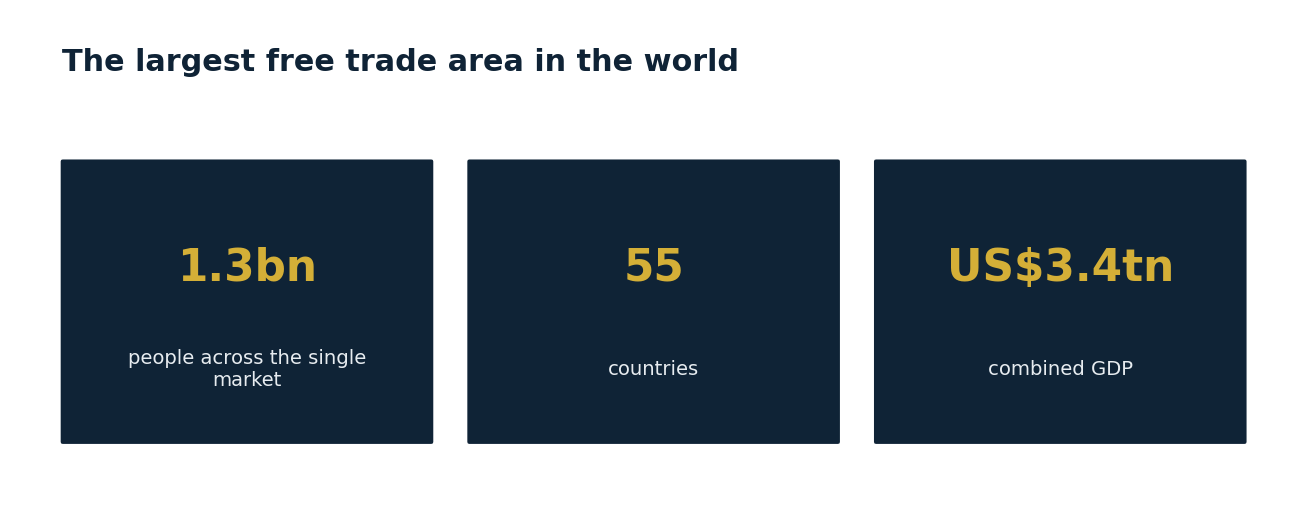
AfCFTA is envisaged as the largest free trade area in the world: 1.3 billion people across 55 countries with a combined GDP of US$3.4 trillion. A single, continent-wide market for goods and services, investment, and business that will re-shape African economies for good.
This presents an immense opportunity to discerning institutions across the continent. Africa Risk Management Advisors was set up specifically to serve this opening, collaborating with like-minded advisors and consultants across the continent to provide leadership on the topical challenges African financial institutions face as the trade architecture reshapes.
Why collaboration compounds
For African-based advisory and consulting firms looking to collaborate with ARMA, the benefits compound across four dimensions.
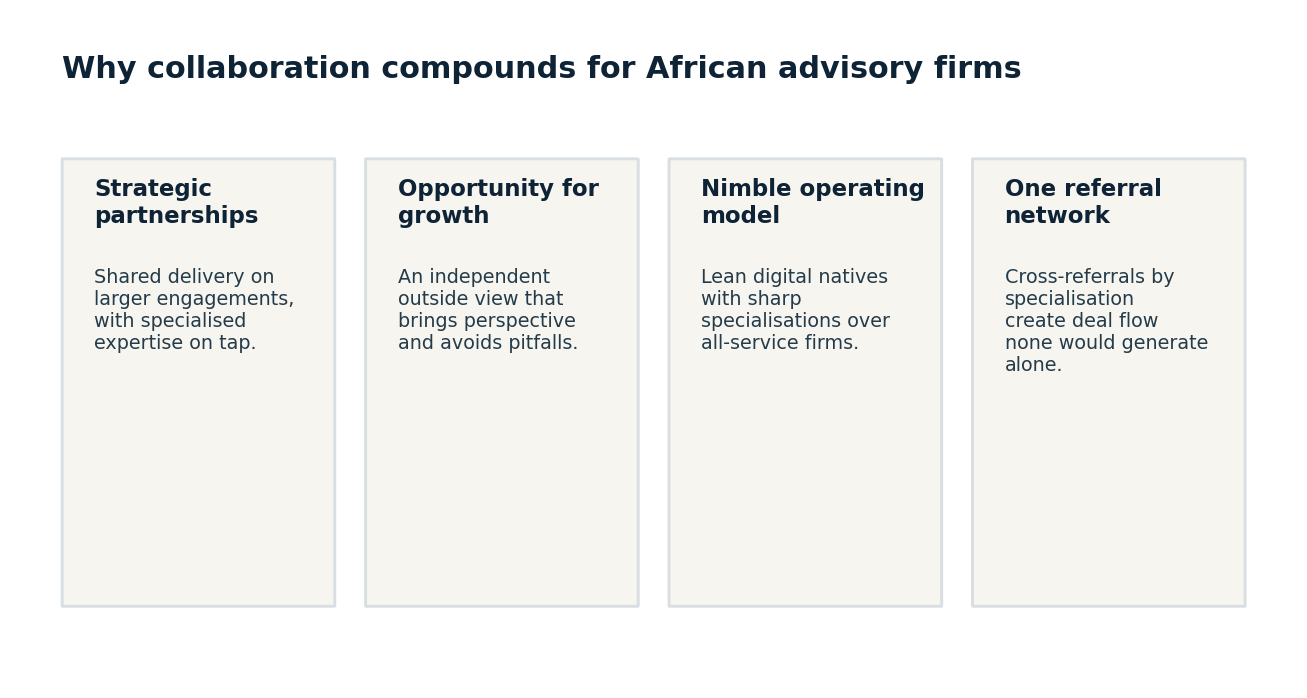
- Strategic partnerships. Collaborating among peers provides business growth, shared burden of larger engagements, and specialised expertise on tap. This benefits clients but also ensures delivery on assignments that would not be possible otherwise.
- Opportunity for growth. Collaboration provides a sounding board for best practice. An independent outside view of a situation brings perspective and avoids unnecessary pitfalls in a consulting engagement.
- Nimble operating model. The pandemic forced consulting firms to rethink. The future supports lean digital natives with sharp specialisations over large all-service firms. Collaboration between firms with different specialisations is the model that works for African market reality.
- One referral network. The unpredictability of consulting work creates lumps. Collaborating partners lighten the load. Cross-referrals based on specialisation create steady deal flow none of us would generate alone.
The five years since this piece was written have only sharpened the case. AfCFTA Phase II rules of origin are now operational, PAPSS is settling real volume, and DFI capital is flowing toward institutions that can demonstrate cross-border capability.
Where ARMA comes in
ARMA's bench model is built for exactly this moment: phase-by-phase delivery that brings the right specialist to each engagement rather than a generalist by the day. For advisory firms and financial institutions positioning for the AfCFTA trade architecture, visit client.africarisk.net to discuss collaboration or scope an engagement.