Basel III.1 implementation timelines for African banking regulators
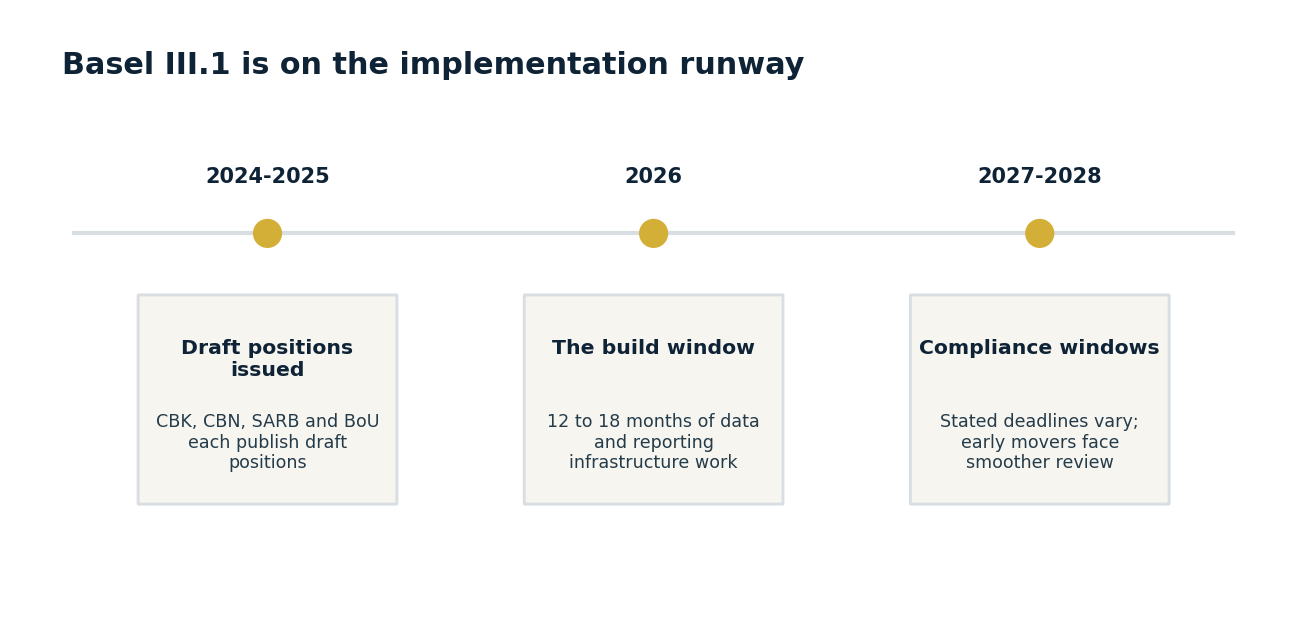
Basel III.1, the final post-crisis prudential framework, is now on the implementation runway across African banking regulators. Kenya's CBK, Nigeria's CBN, South Africa's SARB, and Uganda's BoU have each issued draft positions over the 2024-2025 cycle. The compliance windows vary, but the strategic question for every African bank is the same: do you treat Basel III.1 as a 2027-2028 problem or a 2026 priority?
What is changing, and where it bites
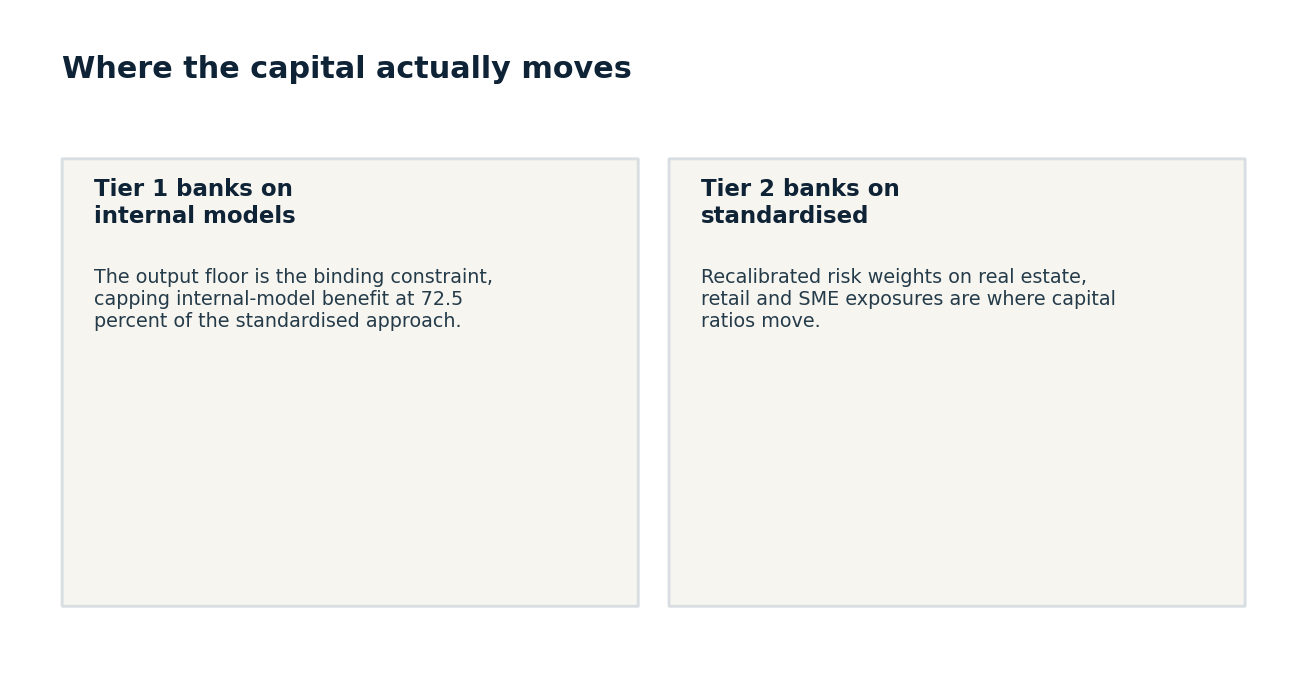
The treaty-text changes are well documented. The standardised approach to credit risk is recalibrated; the output floor caps internal-model benefits at 72.5 percent of standardised; the operational risk capital charge is reset; the credit valuation adjustment framework is overhauled. Where the capital actually moves depends on the bank.
Three implementation realities
Three realities African banks are now navigating:
- The supervisor's stated deadline is the latest you can be ready, not the earliest. SARB and CBK have both signalled that early-mover banks will face smoother supervisory review cycles in subsequent years. Late-mover banks pay in supervisor scrutiny.
- The data infrastructure is not the same as today's. Producing Basel III.1-compliant capital reports requires granularity, look-up tables, and disclosure templates that the current Basel III infrastructure does not have. That is a 12 to 18 month build. Banks that started in 2025 are now mid-build. Banks that have not started are now exposed.
- The capital impact is asymmetric across portfolios. Banks with concentrated real estate exposure, concentrated SME exposure, or significant CVA on derivative books will see meaningful capital ratio movements. Modelling the impact by line of business and by jurisdiction is a 6 to 8 week piece of work most banks are still scoping.
The strategic question is not whether Basel III.1 arrives. It is whether you build ahead of the deadline or pay for the delay in supervisor scrutiny.
Where ARMA comes in
ARMA supports African banks on Basel III.1 implementation with capital impact modelling, supervisor pre-engagement, and capital planning under the new framework. A typical engagement is a 12-week diagnostic and capital plan. It is built for institutions that need a credible Basel III.1 readiness position by year-end 2026. Visit client.africarisk.net to scope the engagement.